Electric Burner Not Heating
A surface element does not warm up or heats only intermittently. Element condition, controls or electrical connections may require assessment.
Stove & Range Service
When a stove burner won't heat, gas ignition becomes unreliable or a cooking surface stops responding, preparing meals can become frustrating. Learn about common stove problems and contact us to discuss repair options in Edmonton.
Common Stove Problems
Stove problems can involve heating elements, ignition, electronic controls or power supply. The type of cooking surface helps narrow down which systems may be relevant.
A surface element does not warm up or heats only intermittently. Element condition, controls or electrical connections may require assessment.
The igniter may click without lighting the burner. Moisture, burner-cap placement or ignition-related components can sometimes contribute.
Cookware heats more slowly than expected or temperature control becomes inconsistent. Possible causes vary between gas, radiant, coil and induction systems.
A cooking zone does not activate or displays a cookware warning. Pan compatibility, placement or electronic controls may be relevant.
A knob, touch panel or display may stop responding or show an unfamiliar error code. The underlying issue depends on the appliance design.
A burner may stop working during use or electrical protection may trip. This may require professional attention before the appliance is used again.
Safety first: If you suspect a gas leak, leave the area and contact the gas utility or emergency services from a safe location. Do not operate electrical switches or attempt to ignite the stove. Stop using cooking equipment showing sparks, smoke, damaged glass or other serious hazards.
Stove & Range Configurations
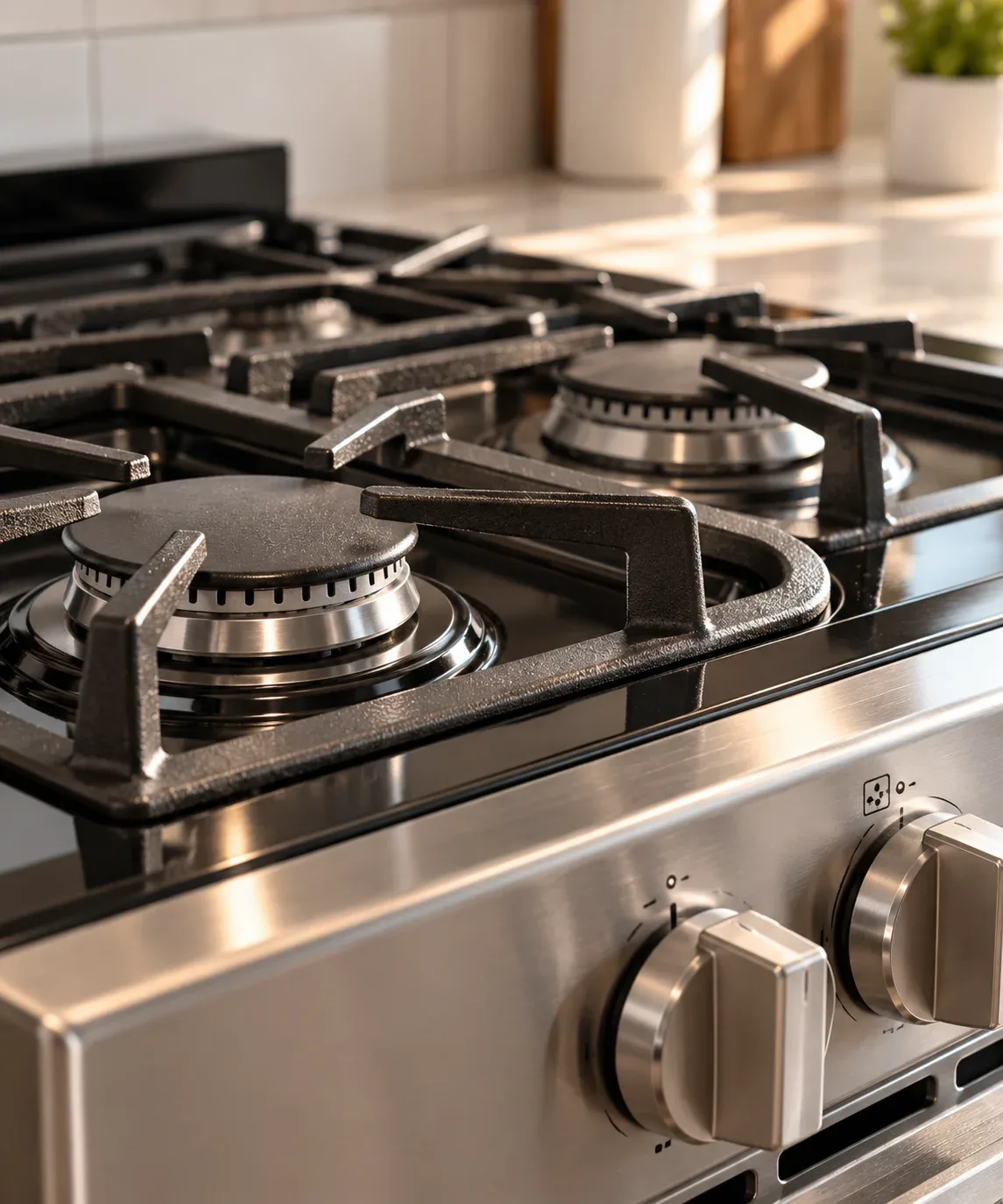
Gas burners, exposed electric coils, radiant glass surfaces and induction zones use different methods to heat cookware.
Gas-fired surface burners use controlled flames, burner heads and ignition components. The oven section is part of the range.
Traditional electric cooking surfaces use exposed heating coils and individual element controls.
Radiant heating elements operate beneath a flat ceramic-glass surface with marked cooking zones.
Induction zones use electromagnetic energy to heat compatible cookware. Their glass surfaces can resemble radiant models.
These illustrations show general stove and range technologies, not exact products. Actual construction and controls depend on the manufacturer and model. Service eligibility must be confirmed for the specific appliance.
Ask About Your Stove ↗Stove Assessment
Stove problems may involve heating elements, gas ignition, temperature regulation or electronic controls. The appropriate assessment depends on the range's energy source and design.
Mention the stove brand, model if known, whether it uses gas, electric coils, radiant glass or induction, and which burner or cooking zone is affected. Include any displayed error code.
Electric coil elements, radiant heating assemblies and associated controls may be relevant when a cooking zone heats poorly or not at all.
Ignition electrodes, burner-head condition and gas-related controls can be relevant to lighting problems. Gas system work requires appropriate professional qualifications.
Knobs, switches, sensors and electronic boards may influence burner activation, settings or the response of a range control panel.
Compatible cookware detection and induction-related electronics may be relevant when a zone fails to activate or reports an error.
These are general examples of stove systems, not a diagnosis or a fixed inspection checklist. The appliance model, energy source and reported condition determine what assessment is appropriate.
Stove Brands & Models
Different stove manufacturers use different cooking elements, burner assemblies, control systems and replacement components. Sharing the model number makes your repair inquiry more specific.
Stove model labels may be found around the oven door frame or storage drawer area, depending on the design. Do not move or dismantle a heavy range just to locate the label.
These names are provided for reference, not as a claim of manufacturer authorization, official affiliation or guaranteed repair availability. Confirm service options for your particular stove model.
Stove Repair / Questions
Information about burner heating, ignition, cooking surfaces and stove repair inquiries in Edmonton.
The issue may involve the heating element, control switch, electrical connection or another component. The exact cause depends on whether the stove uses exposed coils, radiant glass or induction technology.
Moisture, burner-cap placement or ignition components can sometimes contribute to clicking without ignition. A continuing or unusual ignition problem should be assessed appropriately. If you suspect a gas leak, leave the area and contact the gas utility or emergency services from a safe location.
No. Both may have similar-looking glass surfaces, but radiant electric ranges heat elements beneath the glass, while induction ranges use electromagnetic energy to heat compatible cookware.
Induction cooking requires compatible cookware. Pan size, placement and model-specific controls may affect detection. If compatible cookware is not recognized consistently, the appliance may require assessment.
You can submit an inquiry for either arrangement and share the brand, model and reported problem. Service availability and eligibility depend on the specific appliance and its energy source.
If available, note the manufacturer, model number, cooking surface type and affected burner or control. Mention any error code, unusual sounds or changes in heating performance. Avoid disassembling the stove to collect information.
Service Documentation
Previous service invoices, appliance records and written warranty terms may be useful when discussing a repair. Actual coverage depends on the applicable conditions.
Thank You!
Your message has been sent successfully. We'll get back to you shortly.