Washer Not Draining
Water remains inside the drum after a cycle. Drainage problems may involve a blockage, pump-related issues or another condition that requires assessment.
Washing Machine Service
When your washer stops draining, refuses to spin or makes unusual noises, laundry can quickly pile up. Explore common washing machine problems and get in touch to discuss repair options for your appliance in Edmonton.
Common Washing Machine Problems
One symptom can have several possible causes. Identifying what changed during a wash cycle can help make a service inquiry more useful.
Water remains inside the drum after a cycle. Drainage problems may involve a blockage, pump-related issues or another condition that requires assessment.
Clothes remain unusually wet, or the washer does not complete the expected spin cycle. Load balance, controls and drive-related components may be relevant.
Unusual vibration, knocking or movement can be associated with installation, an unbalanced load or worn mechanical components.
Water on the floor may come from a hose, connection, seal or another source. Stop using the machine if a leak could create an electrical hazard.
The control panel may respond without starting a cycle, or the machine may appear unresponsive. Electrical supply, door or lid interlocks and controls may need consideration.
A washer may pause, display an error or stop before completing the selected program. The reported error and the point in the cycle are useful details.
Washing Machine Configurations
Loading style, drum arrangement and machine size can influence the components involved in a washer problem.
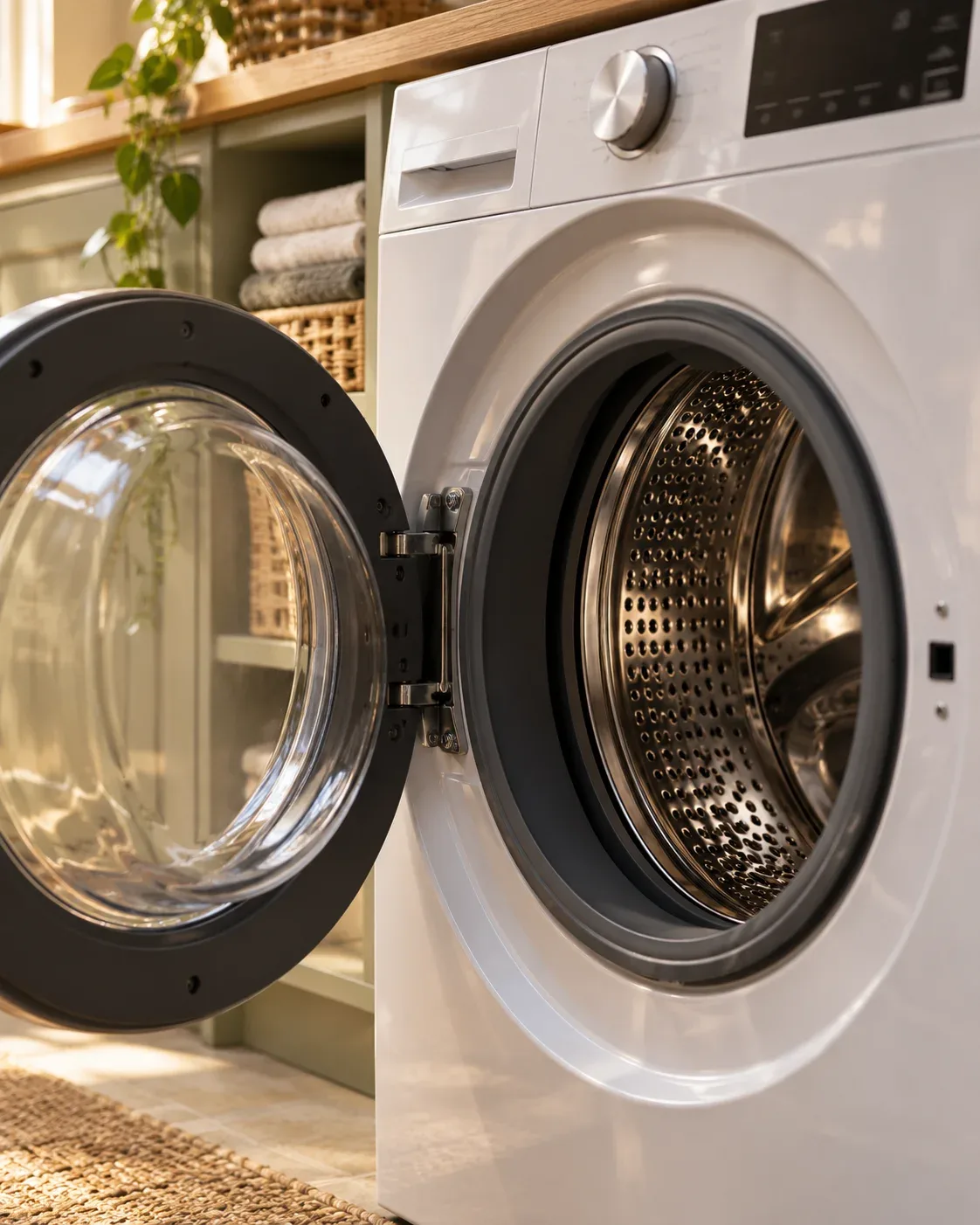
A horizontal-axis drum accessed through a front door. Door sealing and drainage can be relevant to repair inquiries.
A vertical-axis washer with a tall central agitator inside the tub to help move laundry through wash water.
A vertical-axis top-loading washer with a low-profile wash plate rather than a tall central agitator.
A smaller cabinet and capacity for limited spaces, depending on the particular model and installation.
These illustrations show general washer designs; internal configurations, components and service suitability depend on the manufacturer and model.
Ask About Your Washer ↗Washer Assessment
A washing machine relies on water supply, drainage, movement and electronic or mechanical controls. Different symptoms point toward different areas for possible assessment.
Share the washer's brand and model, whether it is a front-load or top-load machine, any error code and when the issue occurs during the wash cycle.
Water supply, inlet-related components and fill controls may be relevant if a machine fills slowly, takes in too much water or does not fill at all.
Drain hoses, the pump system and restrictions in the drainage path may need consideration when water remains in the machine.
Spin and movement problems may involve load conditions, drive components, suspension or control-related issues, depending on the washer design.
Door or lid locks, sensors and cycle controls may be relevant when a washer refuses to start or stops before completing a program.
These are general examples of systems associated with washer symptoms, not a diagnosis or a fixed list of inspection procedures. The appropriate assessment depends on the appliance and reported issue.
Manufacturer & Model Information
Water systems, drive mechanisms and controls can vary between washing machine manufacturers. Having a model number helps make a service request more specific.
A manufacturer's name alone does not confirm service eligibility. Availability, parts and repair suitability need to be discussed for the particular model.
Names are provided as manufacturer references, not as a claim that all listed companies currently produce every appliance type or that service is guaranteed for every model. No official affiliation or authorization is implied.
Washer Repair / Questions
Answers to common questions about washing machine symptoms and service inquiries in Edmonton.
The cause may involve a drainage restriction, pump-related problem or another issue affecting water removal. The model, any displayed error code and when the problem occurs can help guide an assessment.
A washer may not reach its intended spin speed because of load balance, drainage conditions, control-related issues or mechanical faults. Excessively wet clothes do not automatically indicate one particular failed component.
Some vibration is expected, but significant movement, new knocking sounds or a machine that shifts position may require attention. Loading, installation and internal components can all be relevant.
Stop the cycle when safe to do so. Keep water away from electrical connections and avoid using the washer until the source is understood. Leaks may originate from several different locations.
Yes. You can submit an inquiry for either configuration. Service eligibility depends on the manufacturer, specific model, issue and available arrangements.
No. You can begin by describing the appliance and symptoms. A model number or displayed error code can provide helpful additional context when available.
Service Documentation
Service records, invoices and written warranty information are useful when discussing previous washing machine repairs. Coverage depends on the applicable terms.
Thank You!
Your message has been sent successfully. We'll get back to you shortly.